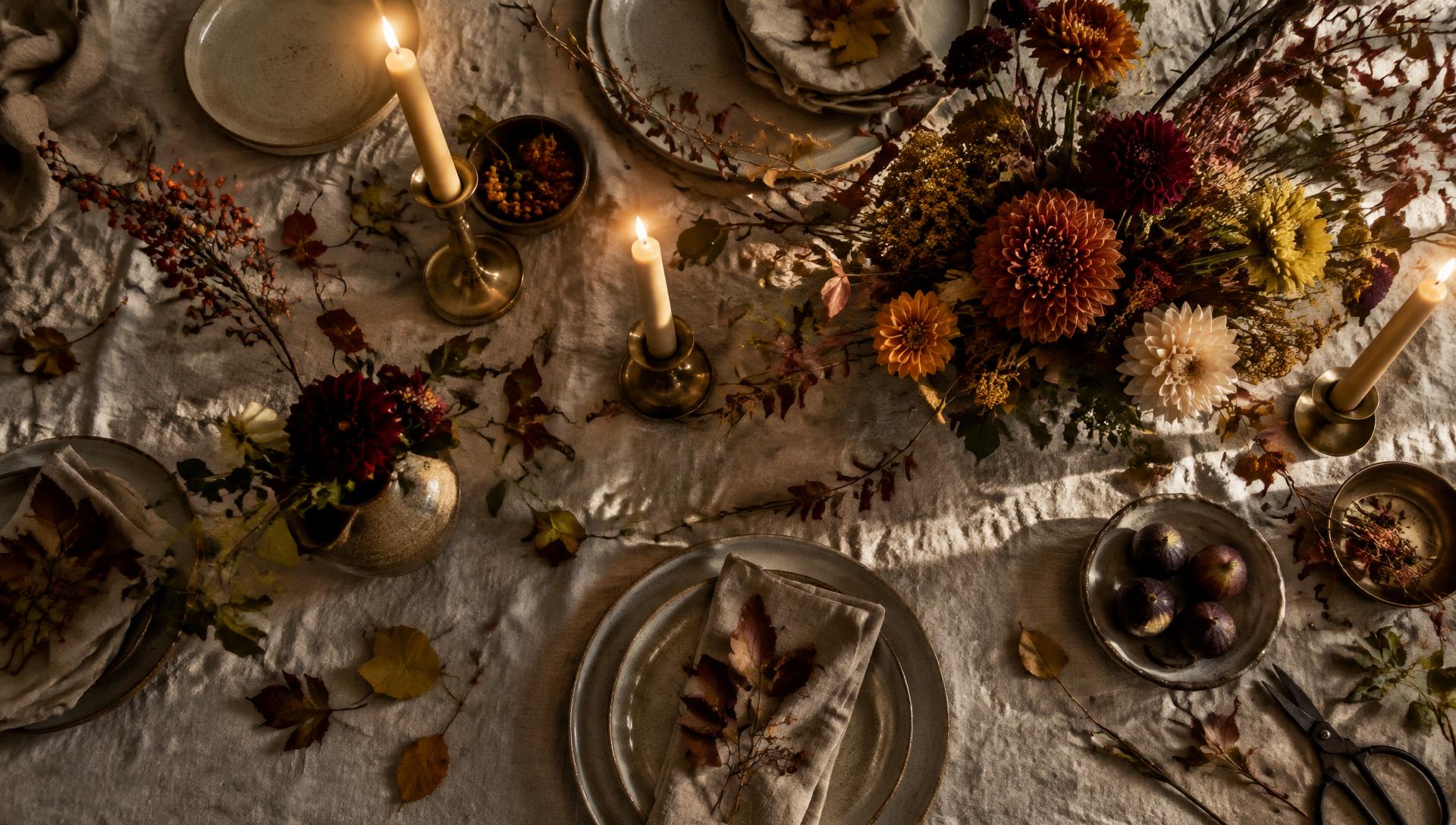
Start with the lights
If you change one thing, change the lighting. Turn off the overheads and use lamps and candles instead. Overhead light flattens everything. Low, warm light makes a small room feel close in a good way.
Unscented candles only on the table. Scented ones fight with the food. Group a few at different heights rather than lining them up, and keep a lighter somewhere you'll actually find it.
Keep the middle low
Everything in the center should stay below chin height when people are sitting, roughly 12 inches. If guests have to peek around a vase, it's working against you.
Run things down the middle in a line instead of one big centerpiece. A few glasses with herb cuttings, a bowl of clementines, a couple of small squash. It looks intentional and leaves room for platters.
Look outside first
Before you buy anything, walk around the yard or the block. Fall gives you branches, dried grasses and leaves. Winter gives you evergreen clippings. Spring and summer give you herbs and whatever's blooming. Cut stems short so they sit low.
Produce works too, and you can eat it afterward. Pears, pomegranates, lemons and little pumpkins all sit nicely on a table.
Linens and the rest
A plain tablecloth or a flat sheet hides a beat-up table. Cloth napkins make it feel like an occasion, even mismatched ones. Honestly, mismatched usually looks better.
Set the table the night before. It takes ten minutes, and it's one less thing when people are about to knock.
See it on a real plan
Open the sample gathering to see the host plan and the guest page side by side.